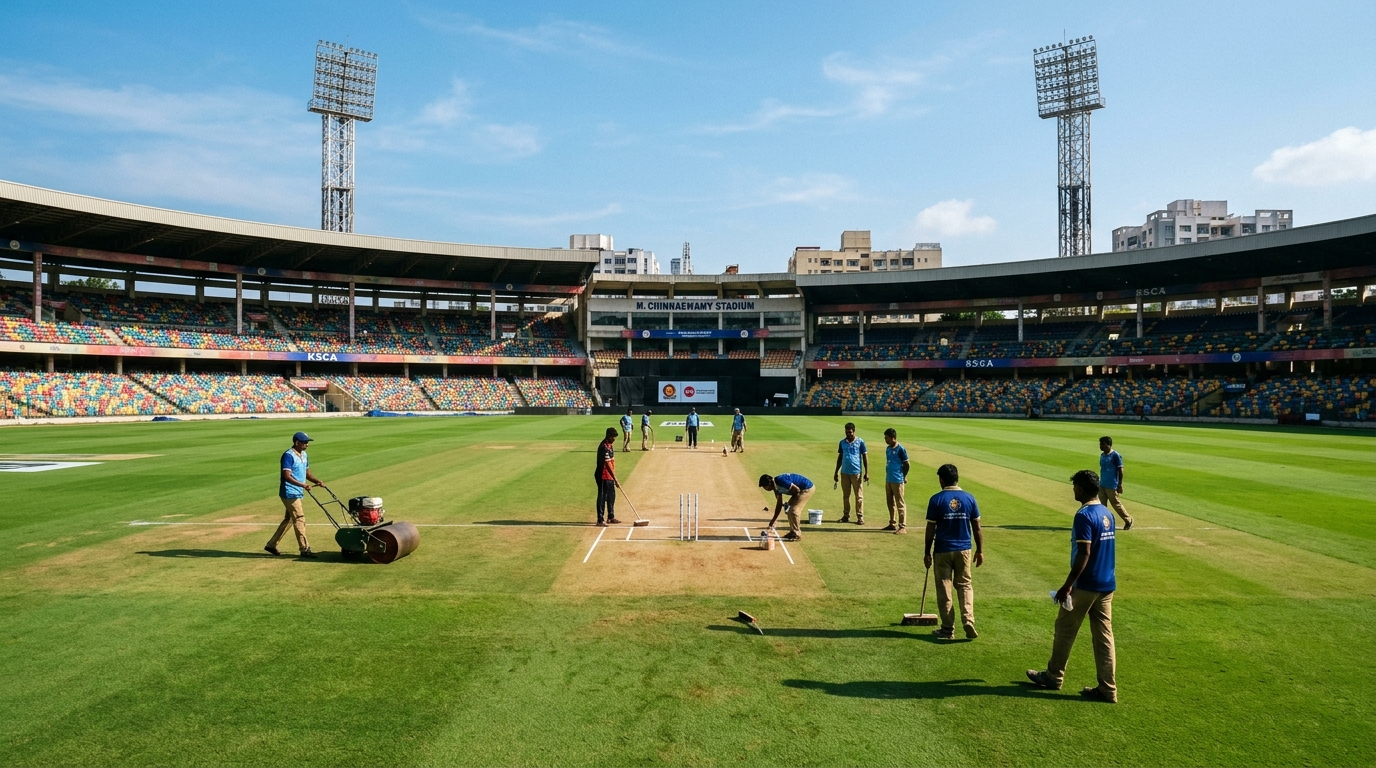
Standardizing Soil Science and Pitch Curation Across Districts
Playing exclusively on artificial matting or concrete tracks hinders young batsmen from mastering back-foot defense against bounce and prevents spin bowlers from learning how to grip turning turf.
KSCA's infrastructure program has laid over 120 first-class turf wickets across district headquarters including Hubballi, Shivamogga, Belagavi, Mysuru, and Alur.
Pitch curators utilize scientifically blended clay soils—combining high-alumina Mandya clay for firm bounce with alluvial silts for moisture retention—overseen by BCCI-certified ground engineers equipped with laser-leveling equipment.
Zonal Academies and Integrated Sports Science
Each regional KSCA center features floodlit practice nets, indoor synthetic training halls, and state-of-the-art gymnasiums staffed by certified strength and conditioning coaches.
Adolescent bowlers undergo periodic motion-capture video screenings to monitor shoulder rotation and lumbar spine alignment, identifying micro-injuries before stress fractures occur.
Age-group tournaments—such as the Under-14 and Under-16 inter-district leagues—are conducted on these world-class surfaces, providing competitive match experience on true turf.
Democratizing State Squad Selection
The fruits of this decentralized investment are evident in Karnataka's senior Ranji Trophy and Vijay Hazare Trophy squads, where over 60% of players now originate from tier-2 and tier-3 towns.
By bringing first-class playing conditions directly to rural districts, KSCA has constructed an unshakeable talent pipeline that sets the gold standard for domestic sporting development in India.
Engineering Metrology, SCADA Telemetry and Field Calibration
Under operational protocols established across Karnataka civic agencies, real-time telemetry systems and industrial SCADA backbones ensure continuous data fidelity. Precision sensors calibrated to international metrological standards continuously transmit key physical parameters to central municipal monitoring suites.
Automated edge-computing nodes execute local anomaly detection routines, triggering immediate alerts when sensor readings deviate from baseline engineering parameters. This telemetry-first framework prevents cascade failures and optimizes preventive maintenance cycles across public utility corridors.
Statutory Regulatory Frameworks, Municipal Audits and Quality Compliance
Regulatory adherence is governed by strict state administrative codes and environmental quality standards. Independent third-party inspection agencies conduct mandatory quarterly audits to verify structural integrity, emissions compliance, and worker safety parameters.
All operational data logs are cryptographically stamped and archived on state government public dashboards, guaranteeing full transparency under the Karnataka Right to Information regulations and municipal oversight committee guidelines.
Urban Economics, Resource Efficiency and Sustainable Long-Term Horizons
From an urban economics perspective, sensorized infrastructure and formalized artisanal production networks generate significant efficiency dividends. Resource wastage is substantially reduced, lowering operational expenditures for civic bodies while creating skilled technical employment in municipal maintenance and data operations.
Regional planning authorities note that these modernized infrastructure deployments establish scalable blueprints for Tier-2 urban hubs across Karnataka, including Mysuru, Hubballi-Dharwad, and Mangaluru, reinforcing regional economic resilience and sustainable urban growth.