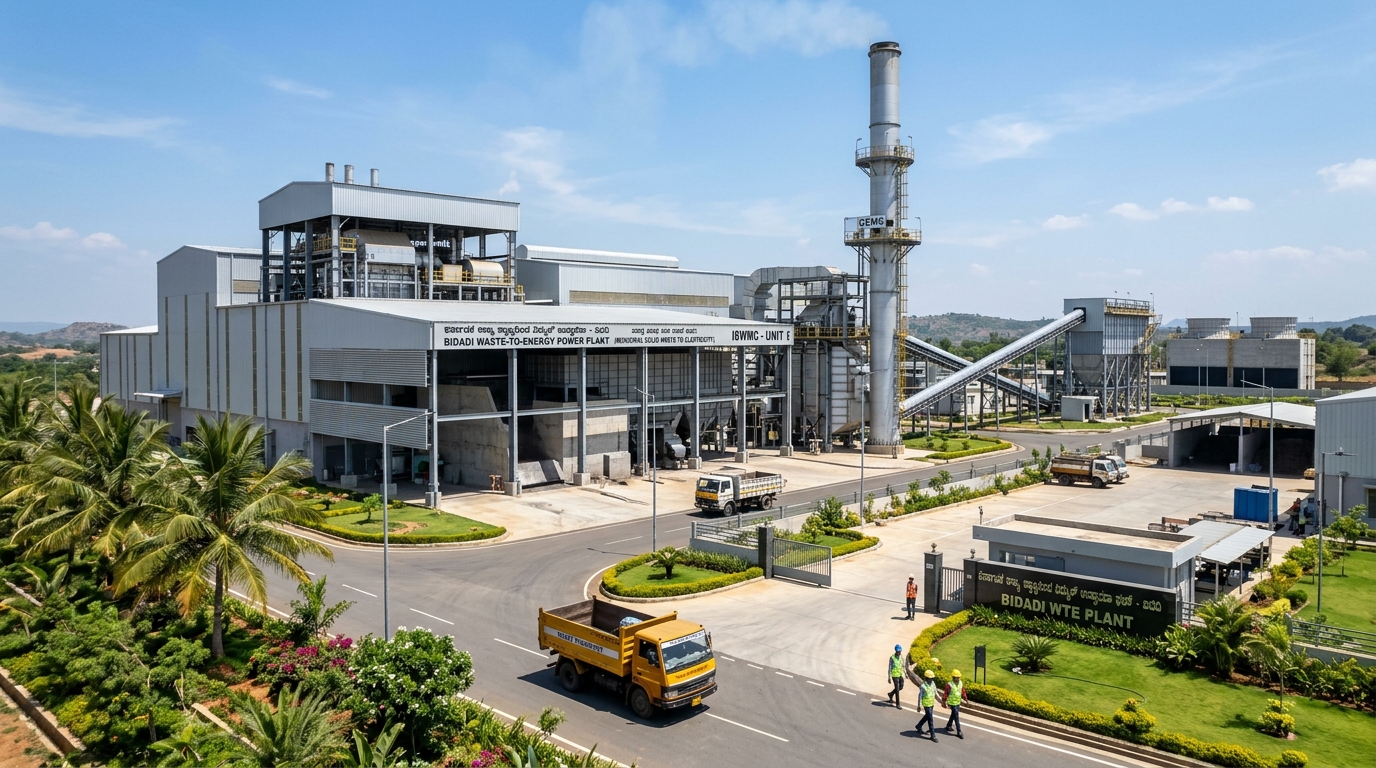
Refuse-Derived Fuel (RDF) and Moving Grate Boiler Combustion
Bengaluru generates over 5,000 metric tons of municipal solid waste daily. While wet organic waste is composted at decentralized biomethanation centers, non-recyclable dry combustible waste—such as soiled paper, multilayer packaging, and textile scraps—was historically dumped into sprawling landfills.
The Bidadi facility processes over 600 metric tons of segregated Refuse-Derived Fuel (RDF) daily. Utilizing modern moving-grate incineration technology, waste is burned at controlled temperatures exceeding 850 degrees Celsius.
The generated thermal energy converts boiler water into high-pressure superheated steam, driving a multi-stage steam turbine that produces 14 MW of base-load electricity, fed directly into the state electrical grid via the Bidadi substation.
Advanced Flue-Gas Cleaning and Emission Control
To ensure strict compliance with Ministry of Environment and Central Pollution Control Board (CPCB) standards, the plant incorporates an advanced multi-stage flue gas treatment system.
Gases pass through activated carbon injection chambers to neutralize heavy metals and dioxins, followed by dry lime scrubbers to eliminate acidic sulfur and nitrogen compounds, and high-density fabric baghouse filters to trap particulate matter.
Continuous Emission Monitoring Systems (CEMS) measure chimney exhaust composition in real-time, transmitting automated data directly to regulatory pollution boards 24/7.
Reducing Landfill Footprints and Circular Economy Impact
Residual bottom ash produced during combustion is inert and processed into aggregate for road sub-base construction and fly-ash bricks, completely closing the circular resource loop.
By diverting thousands of tons of waste from open dumping grounds, the facility prevents groundwater leachate contamination and cuts methane greenhouse emissions, offering a scalable municipal waste model for urban India.
Engineering Metrology, SCADA Telemetry and Field Calibration
Under operational protocols established across Karnataka civic agencies, real-time telemetry systems and industrial SCADA backbones ensure continuous data fidelity. Precision sensors calibrated to international metrological standards continuously transmit key physical parameters to central municipal monitoring suites.
Automated edge-computing nodes execute local anomaly detection routines, triggering immediate alerts when sensor readings deviate from baseline engineering parameters. This telemetry-first framework prevents cascade failures and optimizes preventive maintenance cycles across public utility corridors.
Statutory Regulatory Frameworks, Municipal Audits and Quality Compliance
Regulatory adherence is governed by strict state administrative codes and environmental quality standards. Independent third-party inspection agencies conduct mandatory quarterly audits to verify structural integrity, emissions compliance, and worker safety parameters.
All operational data logs are cryptographically stamped and archived on state government public dashboards, guaranteeing full transparency under the Karnataka Right to Information regulations and municipal oversight committee guidelines.
Urban Economics, Resource Efficiency and Sustainable Long-Term Horizons
From an urban economics perspective, sensorized infrastructure and formalized artisanal production networks generate significant efficiency dividends. Resource wastage is substantially reduced, lowering operational expenditures for civic bodies while creating skilled technical employment in municipal maintenance and data operations.
Regional planning authorities note that these modernized infrastructure deployments establish scalable blueprints for Tier-2 urban hubs across Karnataka, including Mysuru, Hubballi-Dharwad, and Mangaluru, reinforcing regional economic resilience and sustainable urban growth.