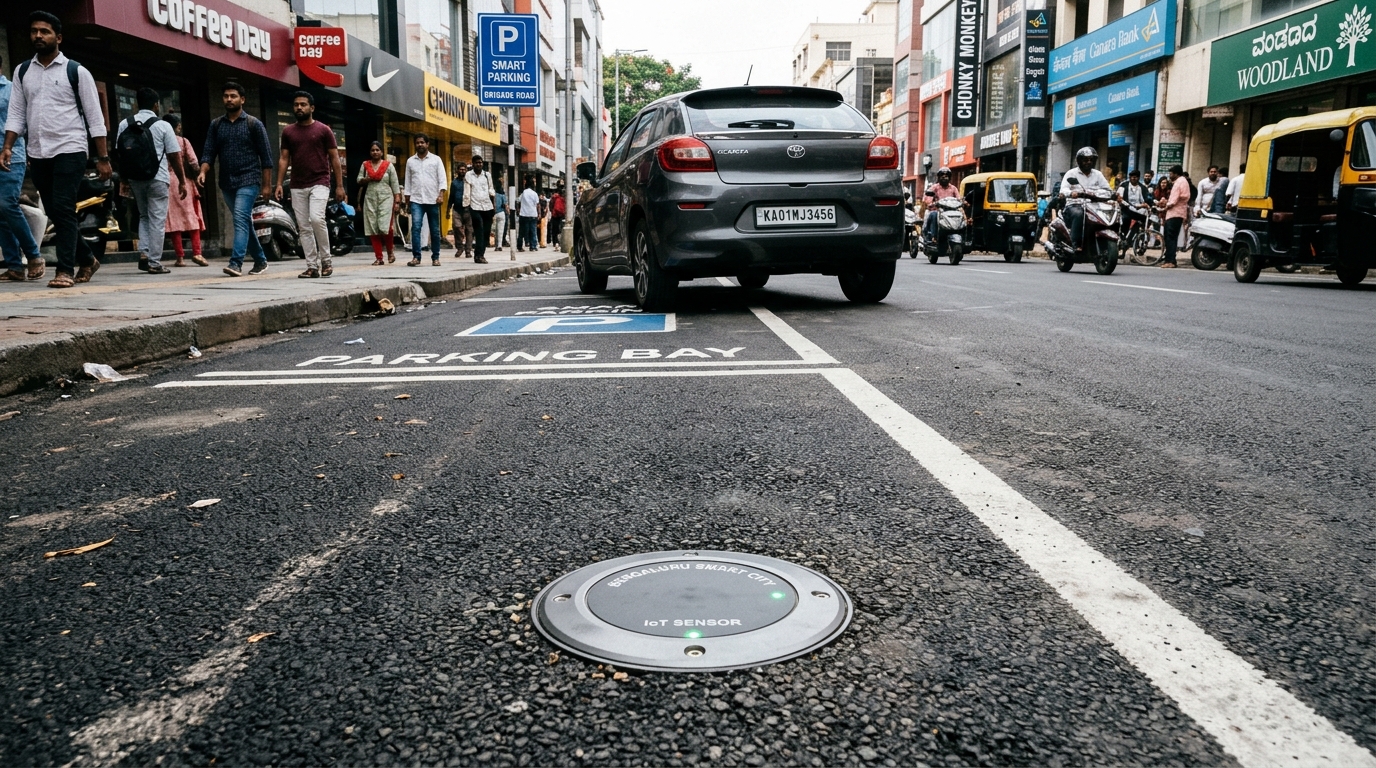
Geomagnetic Ground Sensors and Real-Time Space Telemetry
Searching for street parking historically contributed to an estimated 30% of traffic congestion in core commercial zones. The smart parking framework embeds surface magnetometer sensors into over 4,500 metered on-street parking bays.
When a vehicle parks above the sensor, the distortion in the Earth's natural magnetic field triggers a wireless signal to the city's integrated cloud traffic management platform within two seconds.
Dynamic LED variable message signs positioned at street intersections display the exact number of open parking spaces available on adjacent avenues, preventing drivers from circling blocks in search of spots.
Digital Micro-Payments and Enforcement Automation
Motorists reserve and pay for parking spots seamlessly through the unified city transit mobile app using UPI or FASTag digital wallets.
Traffic wardens equipped with digital handheld scanners verify parking session validity via vehicle license plates, issuing automated e-challans for overstaying, significantly reducing double-parking and restoring pedestrian sidewalk width.
Engineering Metrology, SCADA Telemetry and Field Calibration
Under operational protocols established across Karnataka civic agencies, real-time telemetry systems and industrial SCADA backbones ensure continuous data fidelity. Precision sensors calibrated to international metrological standards continuously transmit key physical parameters to central municipal monitoring suites.
Automated edge-computing nodes execute local anomaly detection routines, triggering immediate alerts when sensor readings deviate from baseline engineering parameters. This telemetry-first framework prevents cascade failures and optimizes preventive maintenance cycles across public utility corridors.
Statutory Regulatory Frameworks, Municipal Audits and Quality Compliance
Regulatory adherence is governed by strict state administrative codes and environmental quality standards. Independent third-party inspection agencies conduct mandatory quarterly audits to verify structural integrity, emissions compliance, and worker safety parameters.
All operational data logs are cryptographically stamped and archived on state government public dashboards, guaranteeing full transparency under the Karnataka Right to Information regulations and municipal oversight committee guidelines.
Urban Economics, Resource Efficiency and Sustainable Long-Term Horizons
From an urban economics perspective, sensorized infrastructure and formalized artisanal production networks generate significant efficiency dividends. Resource wastage is substantially reduced, lowering operational expenditures for civic bodies while creating skilled technical employment in municipal maintenance and data operations.
Regional planning authorities note that these modernized infrastructure deployments establish scalable blueprints for Tier-2 urban hubs across Karnataka, including Mysuru, Hubballi-Dharwad, and Mangaluru, reinforcing regional economic resilience and sustainable urban growth.